
The 2027 Rules, in Brief
On January 1, 2027, the BACB’s 2027 BCBA requirements take effect. We covered the transition and the December 31 application deadline earlier this month. For the fieldwork itself, each month now has to meet these checks:
| Supervised fieldwork | Concentrated fieldwork | |
|---|---|---|
| Hours per month | 20–160 | 20–160 |
| Share of hours supervised | 5% | 7.5% |
| Observation with a client | 60 minutes | 90 minutes |
| Total hours | 2,000 | 1,500 |
At least half of each month’s supervision has to be individual, and at least 60% of all fieldwork hours have to be unrestricted. The Monthly Fieldwork Verification Form (M-FVF) must be signed “by the last day of the calendar month following the month of supervision.” A form signed after that loses the month’s hours.
Which rules apply depends on when the trainee applies, not when they earned the hours. In the BACB’s words, “All supervised fieldwork must meet the requirements in place at the time you submit your certification application.” So a trainee who applies on or after January 1, 2027 needs 2027 forms for every month, including the months they are logging right now.
What a Separate Tracker Misses
Most trainees keep fieldwork in one of two places: a spreadsheet, or a standalone tracker they pay for each month. Both sit outside the system where the work happened.
Every session is typed twice. The session already exists in your practice software, with its client, its service code, its start and end times. The trainee copies it into the tracker anyway, and at month-end someone checks the two against each other.
Supervision is only as good as what someone typed. The BACB counts supervision only from supervisors listed on the signed supervision contract, starting from the date each one signs. A log that doesn’t know the contract can’t tell when a supervisor’s time doesn’t count, so that time can slip into the totals.
Deadlines live in someone’s head. Missing the signing deadline costs a whole month. A practice with eight trainees signs 24 forms a quarter, and a late one often surfaces only when the trainee applies.
What Fieldwork Does
Fieldwork is part of StreamABA, so a trainee’s month starts from their sessions instead of an empty log.
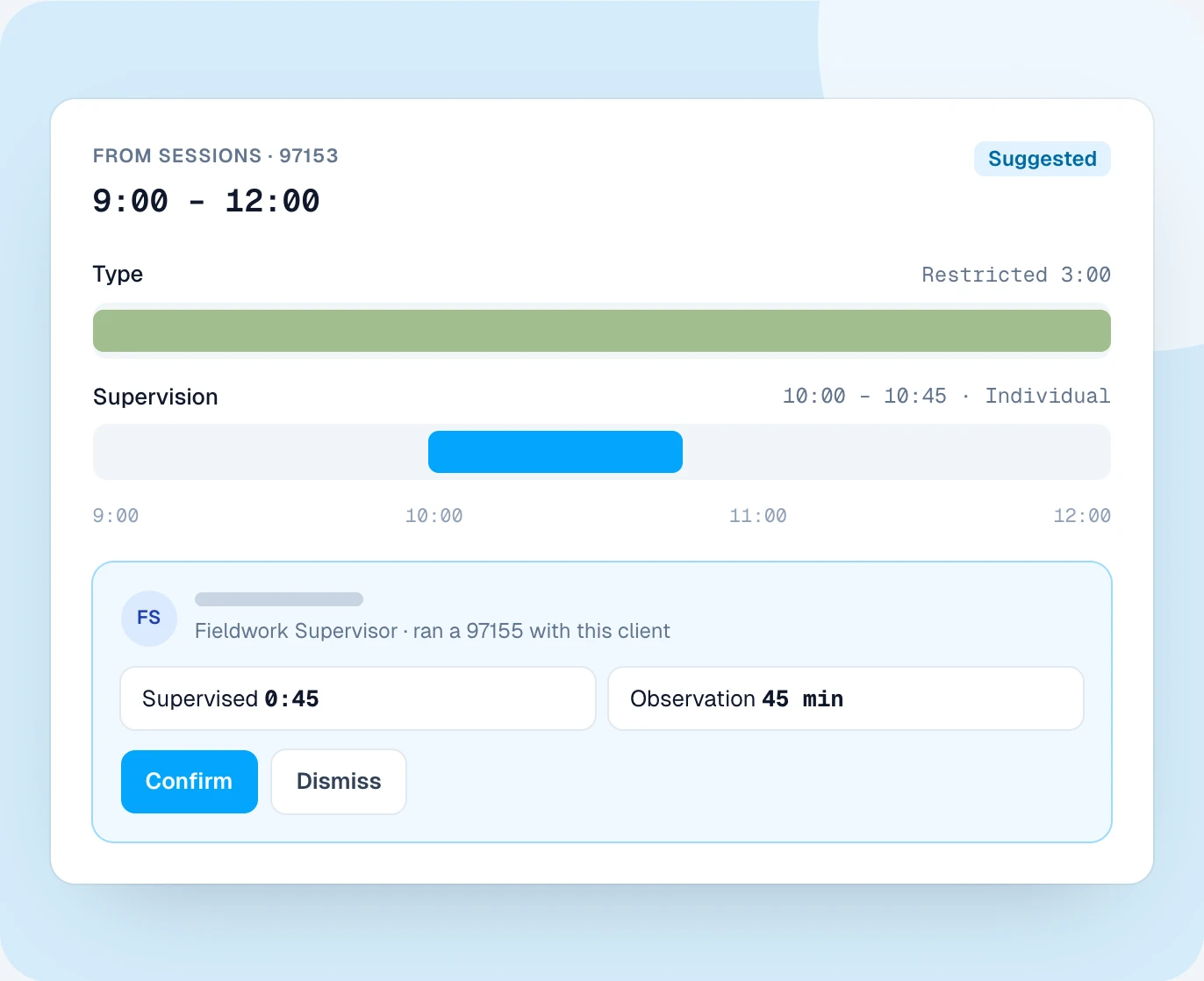
Sessions become fieldwork. Each completed session an Analyst Trainee runs shows up as fieldwork activity, classed restricted or unrestricted by its service code. The trainee can change the class with a reason their supervisor sees. They log the work sessions never show, such as program writing, graphing and supervision meetings, by hand.
Supervision is suggested, then confirmed. When a Fieldwork Supervisor ran a 97155 with the same client during the session, StreamABA suggests the supervision and observation. A suggestion counts only after the trainee confirms it.
Supervision counts only inside the agreement. A Fieldwork Agreement lists who may supervise a trainee. Supervision counts only from Fieldwork Supervisors on a signed agreement, from the date each one signs.
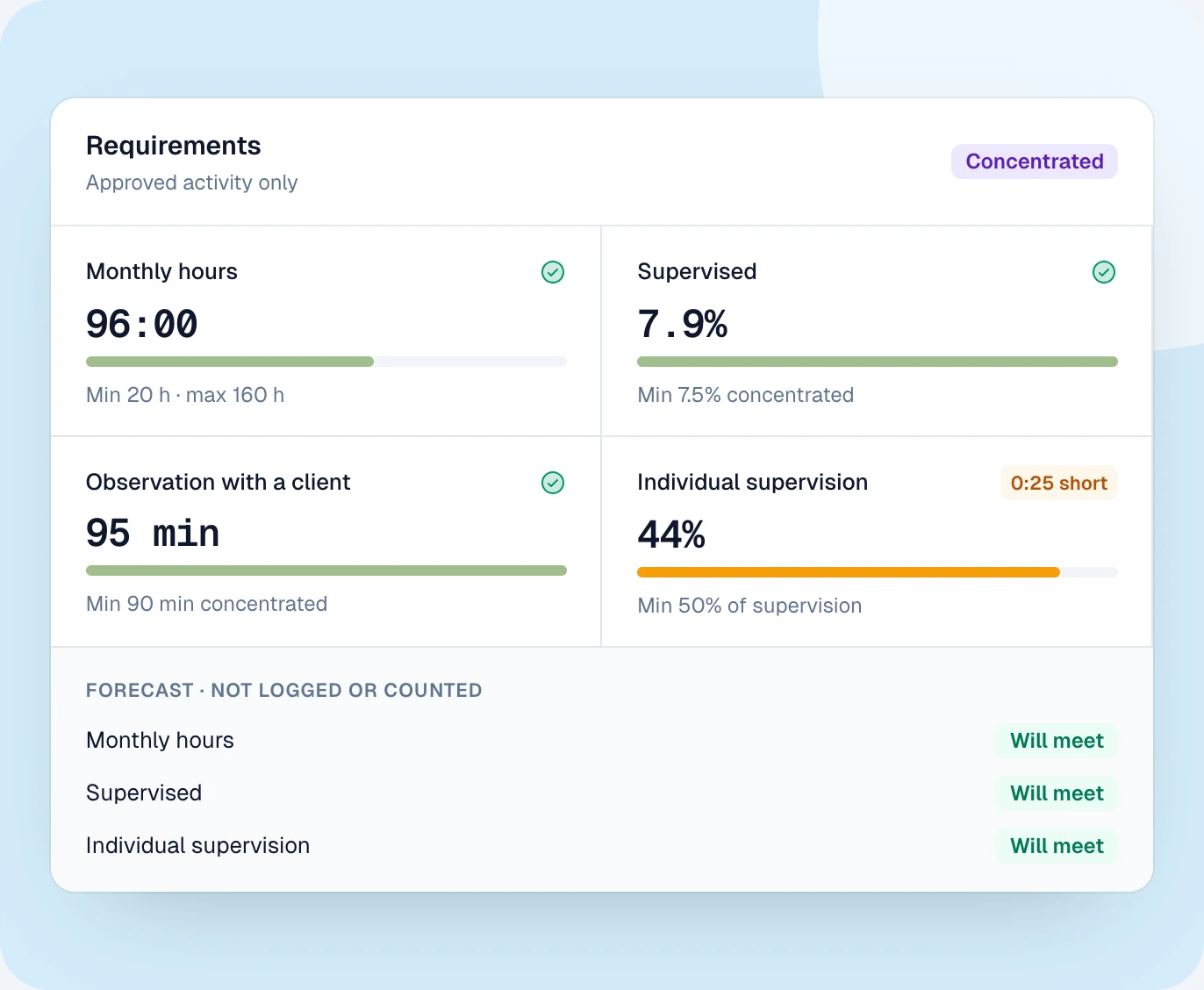
Every month is checked as it happens. Monthly hours, the supervised share, observation minutes and the individual share are checked against the 2027 requirements, with what is still short. StreamABA works out whether the month is Supervised or Concentrated, forecasts the month from scheduled appointments, and projects a completion month.
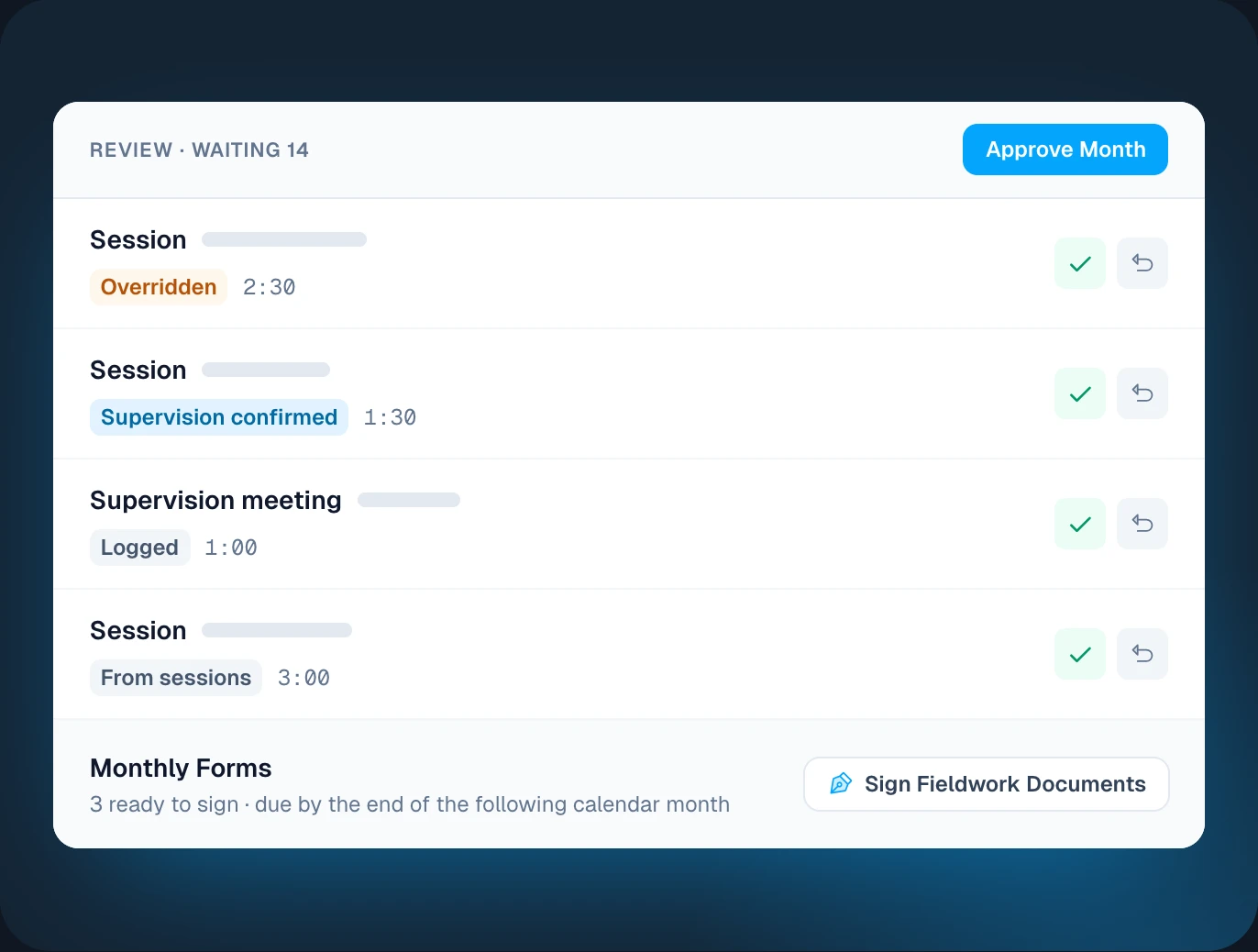
Month-end happens in one sitting. The Responsible Supervisor approves activity from one Review queue, or returns a month to the trainee with a note. After the month ends, StreamABA fills the practice’s official BACB monthly form from the approved activity, and the trainee and supervisor sign it in StreamABA. A supervisor can sign several trainees’ forms at once, and reminders go out before the deadline.
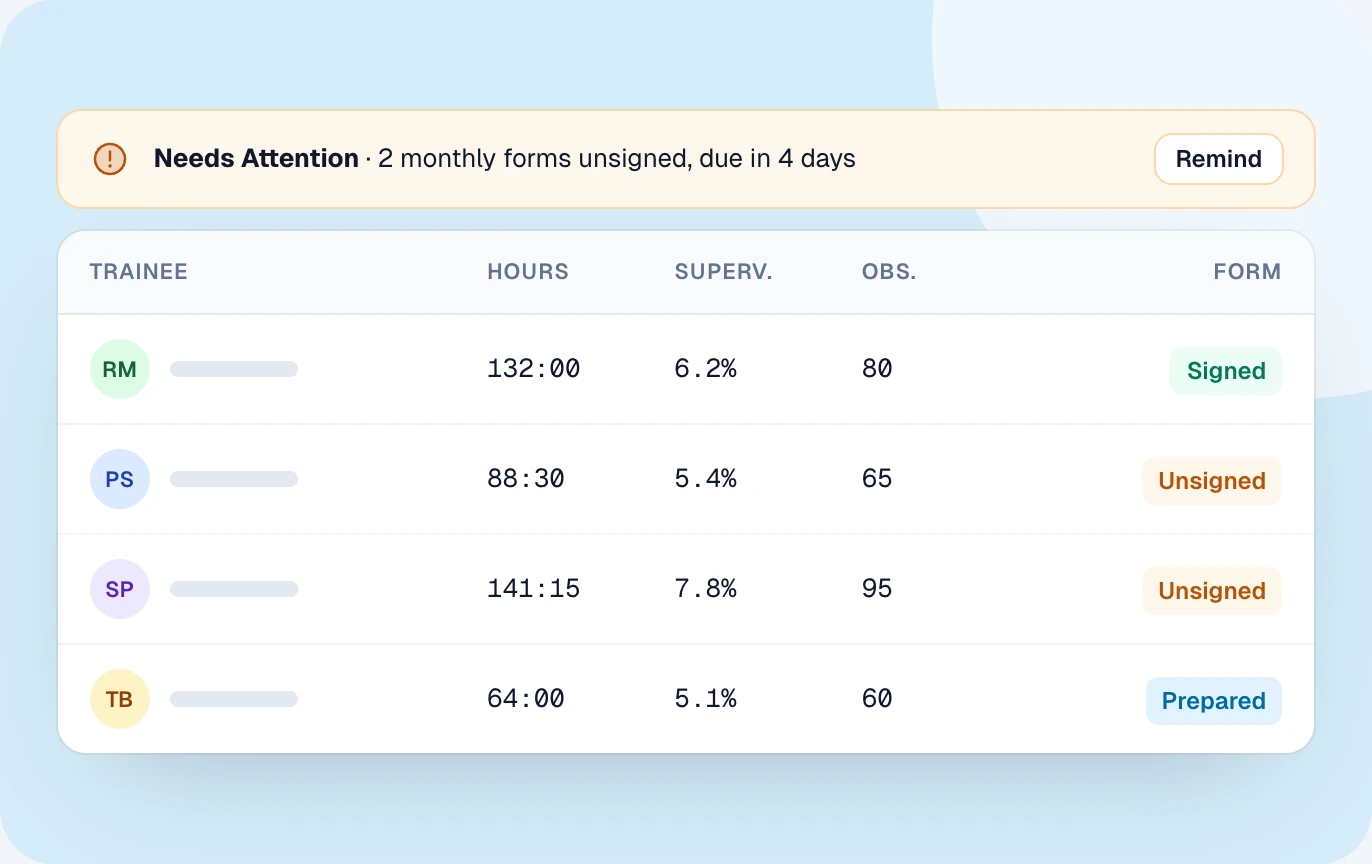
Clinical Directors see every trainee. The Months view shows one row per trainee: hours, supervised share, observation and where the form stands. Needs Attention lists unsigned forms near or past their deadline.
Trainees leave with their records. Application readiness tracks progress toward 2,000 hours (or 1,500 concentrated), flags missing, unsigned and late months, and prepares the Final Fieldwork Verification Form. Earlier months can be imported from a filled 2027 monthly form, or from Excel or CSV with a caution on months before 2027. The trainee or their Responsible Supervisor can download a ZIP of the signed forms at any time, and offboarding a trainee asks an administrator to confirm they have it.
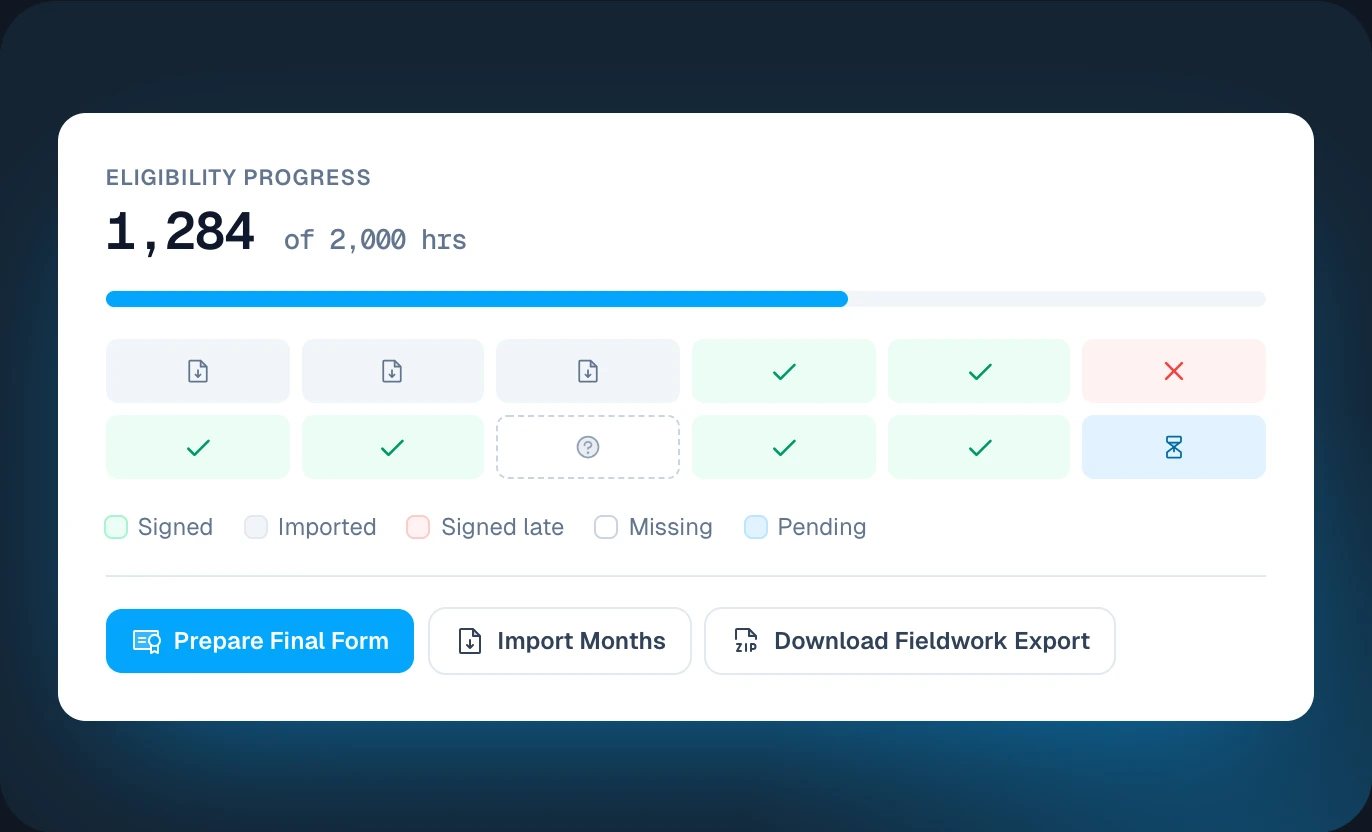
It works in a phone browser, with no app to install. Fieldwork is included in StreamABA, with no per-trainee fee, and trainees pay nothing.
What It Doesn’t Do
StreamABA checks the 2027 requirements only. A trainee who will apply under the 2022 requirements by December 31, 2026 needs a tool that tracks 2022, or the BACB’s 2022 forms. After that date, every applicant uses 2027.
It is for BCBA fieldwork only. It does not track BCaBA fieldwork.
If Your Trainees Already Use a Tracker
If your trainees use mgmtracker or Ripley Fieldwork Tracker today, we wrote side-by-side comparisons with sources, including where each one fits better than StreamABA: StreamABA vs mgmtracker and StreamABA vs Ripley Fieldwork Tracker. Trainees who switch can bring the months they already have with an import.
Supervising trainees through the 2027 transition? Reach out at hello@streamaba.com.
Follow us on LinkedIn and X for more updates.


