
The Audit Usually Happens Too Late
Supervision ratios have become something payers check with arithmetic. In February, MassHealth’s contractor divided 97153 hours by 97155 hours on every 2024 ABA claim and sent recoupment letters to providers at 20:1 or worse, without a chart review. One provider is now suing over $943,000 in clawbacks built on that ratio.
Most practices check the same numbers by hand. Someone exports sessions, builds a spreadsheet, and goes through each caseload, usually at quarter close or when a payer review is already open. That timing causes three problems.
Misses show up after they can be fixed. A client who got too little supervision in July is still short when someone notices in October.
The reason gets lost. A caregiver who cancelled parent training twice is a real explanation. It usually lives in someone’s inbox, not next to the number a reviewer sees.
Compliance and productivity are tracked separately. Billable hours sit in one report and client checks in another, so a BCBA who is ahead on hours but behind on supervision looks fine in both.
What the Analyst Scorecard Does
Analyst Scorecard is part of StreamABA. It reads the completed sessions and care-team assignments already in StreamABA, so there is nothing to export or import.
Every client, every month. StreamABA starts you with three checks: supervision ratio, parent training, and telehealth share of supervision. Your practice turns on the checks it uses and sets each threshold, and can adjust a threshold for a single payer or client. Each month is checked for every client with at least one completed session, and the check is assigned to whoever is the client’s primary analyst on the last day of that month.
A quarter is only as good as its worst month. A miss in any month misses that check for the quarter. The grid shows each client’s checks month by month with the quarter roll-up beside them, so you can see which month did it.
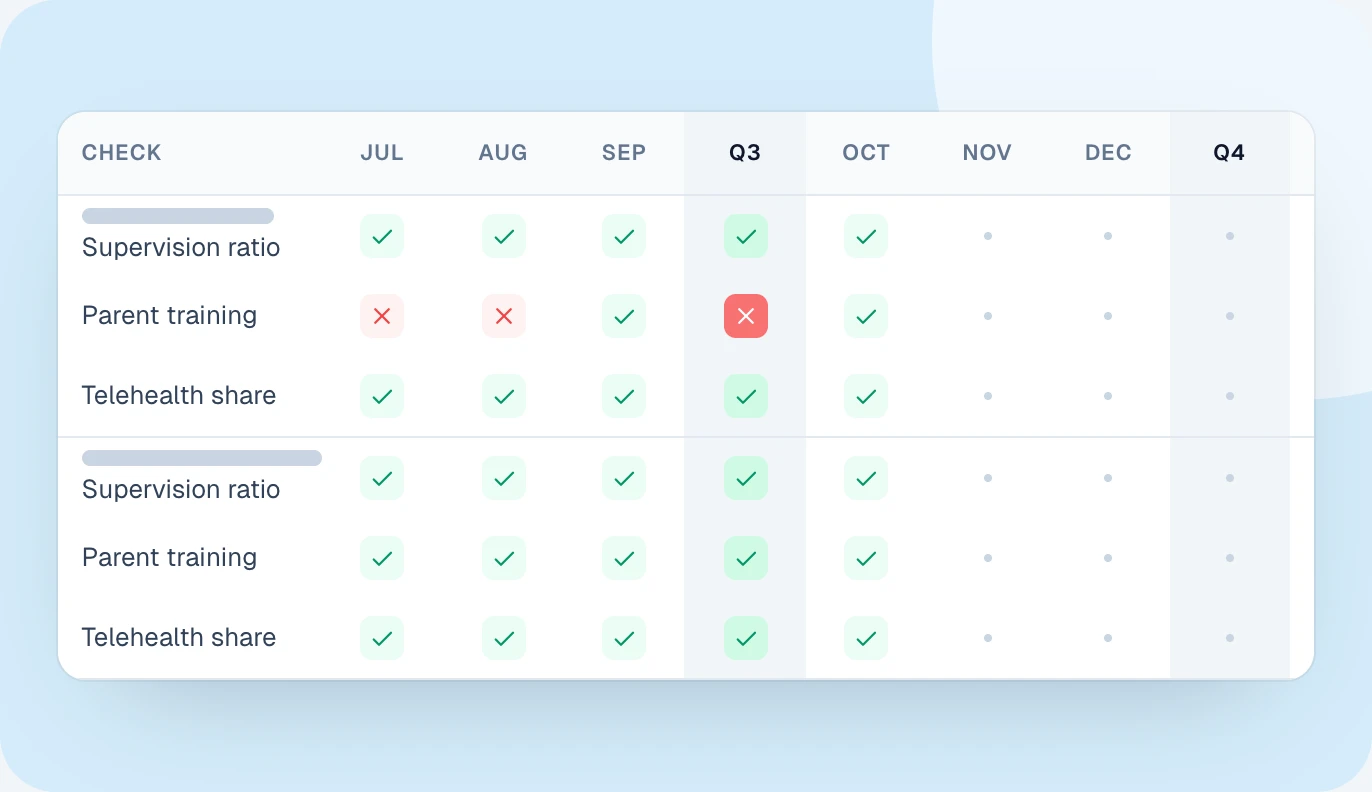
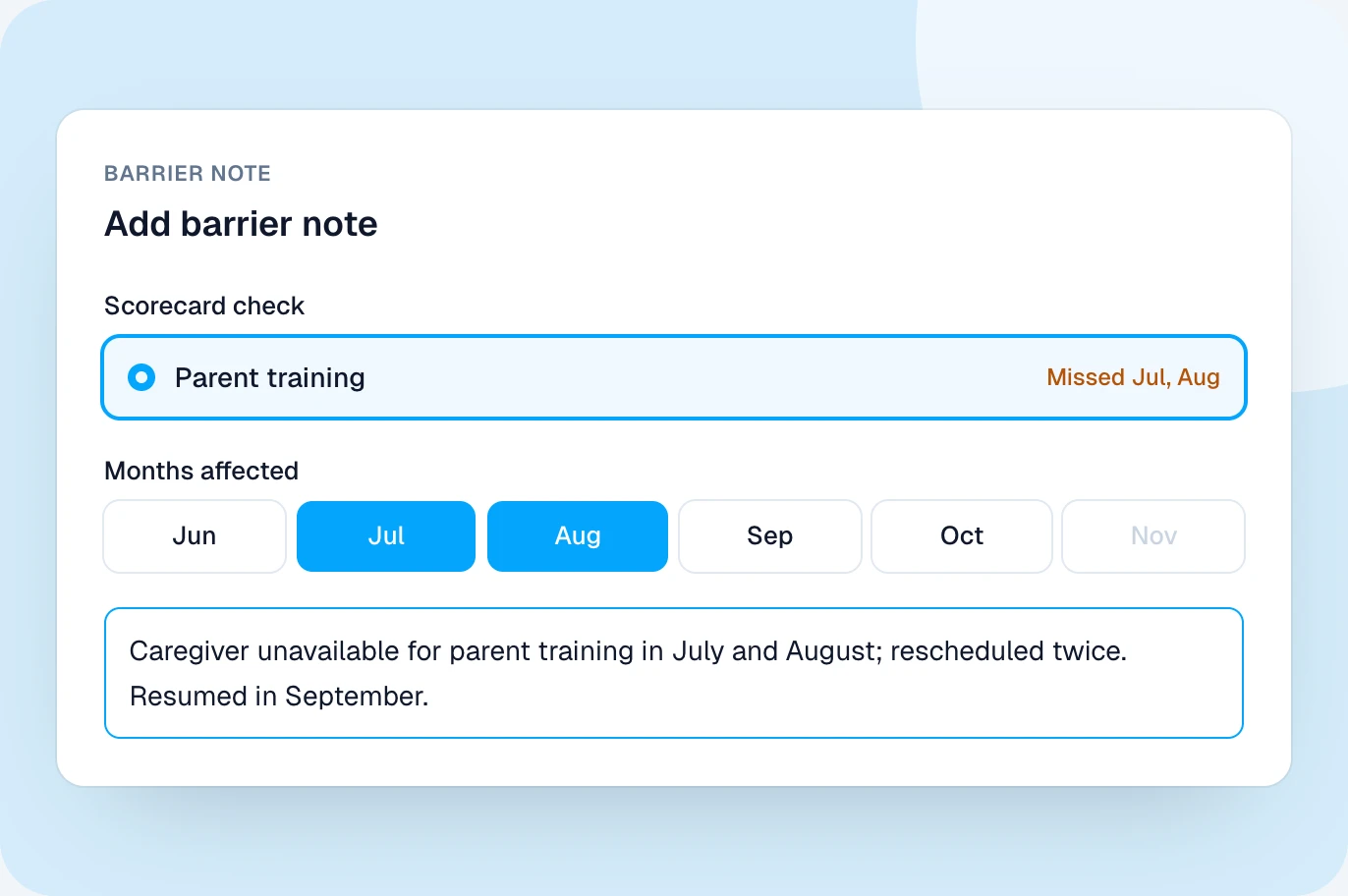
The reason stays with the number. When a check slips for a reason outside the analyst’s control, the analyst or a clinical director adds a barrier note to that client, check, and range of months. The note shows on the grid, so a review starts with the context. Each check can either keep the miss on record or let the note excuse it.
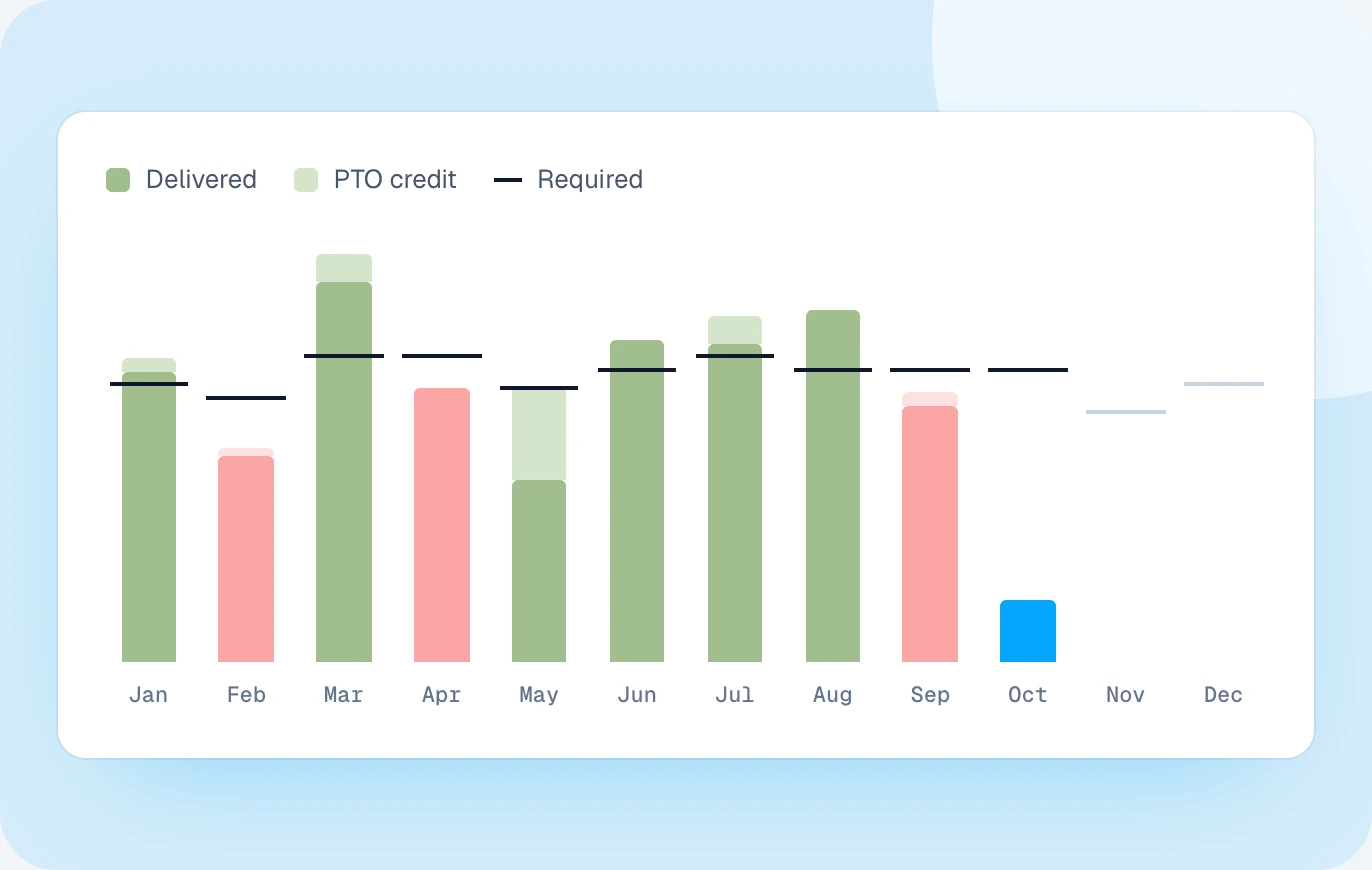
Hours against target, on the same page. Each month shows delivered hours plus PTO credit against what the month requires. A month turns green when it’s met and red when it’s short, and the current month updates as sessions are completed. Required hours are the weekly target divided by five, times the weekdays the analyst was employed, with company holidays left out. A full PTO day earns a full day of target. Monthly PTO and weekly targets are entered on one inputs page, and any month can be overridden.
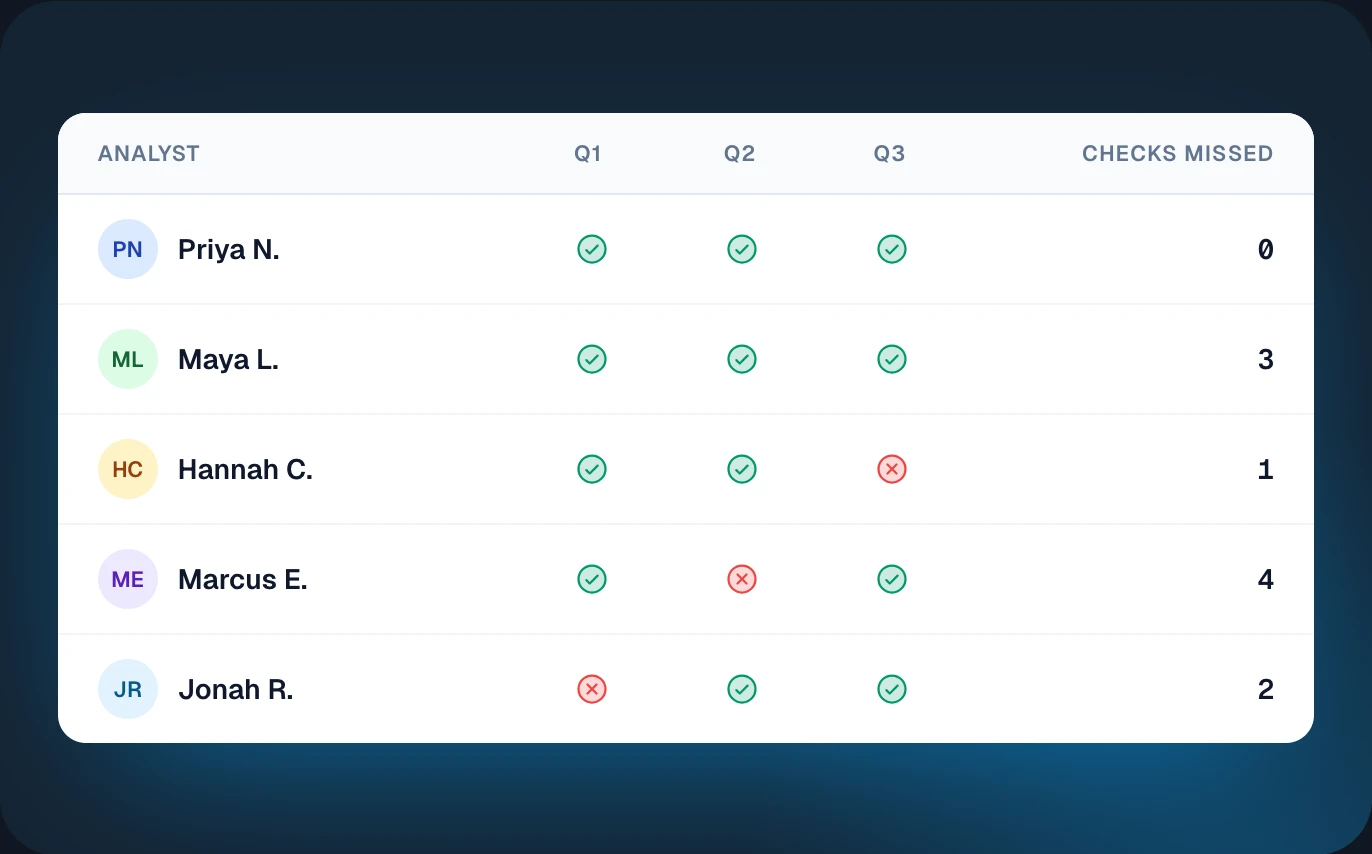
One list for the whole clinical team. Owners and clinical directors see every analyst’s quarters, hours against target, current pace, and missed checks. Clicking a row opens that analyst’s scorecard, where you can find the client behind a miss. Analysts see their own checks, pace, and hours.
If You Pay a Productivity Bonus
Some practices pay BCBAs a quarterly bonus for hours above target. The scorecard can calculate it from the same hours and checks:
| Step | Calculation |
|---|---|
| Net billable hours | Delivered hours + PTO credit |
| Required hours | Weekly target ÷ 5 × workdays |
| Hours over target | Net − required, per quarter |
| Quarterly bonus | Hours over × rate |
The bonus is paid only when the quarter’s hours are met. A quarter with no missed client checks earns the higher compliant rate, so the plan rewards supervision quality as well as volume. Part of a missed quarter can be carried forward. Bonus amounts are visible only to the roles you choose.
If you’re still setting the target itself, we wrote about why the billable target is a caseload decision and how indirect work eats into it.
What It Checks, and What It Doesn’t
The scorecard counts only what StreamABA can see: completed sessions and care-team assignments in StreamABA. Sessions that were never entered don’t count toward hours or checks.
It also doesn’t choose your thresholds. A payer’s supervision ratio or parent training requirement is your practice’s to enter, and different payers can have different values.
Want to see your own caseloads on it? Reach out at hello@streamaba.com.


